The Messiah’s death was never the end of the story. In Scripture, the tomb becomes a doorway — a place where endings turn into God-given beginnings. Through a powerful Hebrew insight, this message explores how what feels like loss, limitation, or finality can become the very place God births resurrection hope and transformation in our lives.
Hanukkah reminds us that God’s light still shines in seasons of uncertainty. In a world facing fear, hostility, and confusion, this ancient story calls us back to faithfulness, courage, and hope. Just as God preserved His people in the days of the Maccabees, He continues to work in quiet, powerful ways today — renewing hearts, strengthening faith, and pushing back the darkness with His enduring light.
Let’s take a deeper dive into the time leading up to and surrounding that first Hanukkah. What does that era have to do with the texts known as The Apocrypha? What contributed to the rise of “apocalyptic” literature and its effect on Jewish culture? Join us as we prepare to celebrate Hanukkah and the arrival of the Light of the World!
Many ask each year: What are the Jewish Fall Holidays or Biblical Holidays? Here is an overview from a messianic perspective:
In Leviticus 23, we read about three holidays, commonly referred to as the “fall feasts.” The underlying fact that we should always keep in mind is that Scripture clarifies that these special seasons are not merely “Jewish” holidays—they are the Lord’s! In the opening of that chapter, Adonai clearly states: “Speak to Bnei-Yisrael, and tell them: These are the appointed moadim of Adonai, which you are to proclaim to be holy convocations—My moadim” (Lev 23:3/TLV).
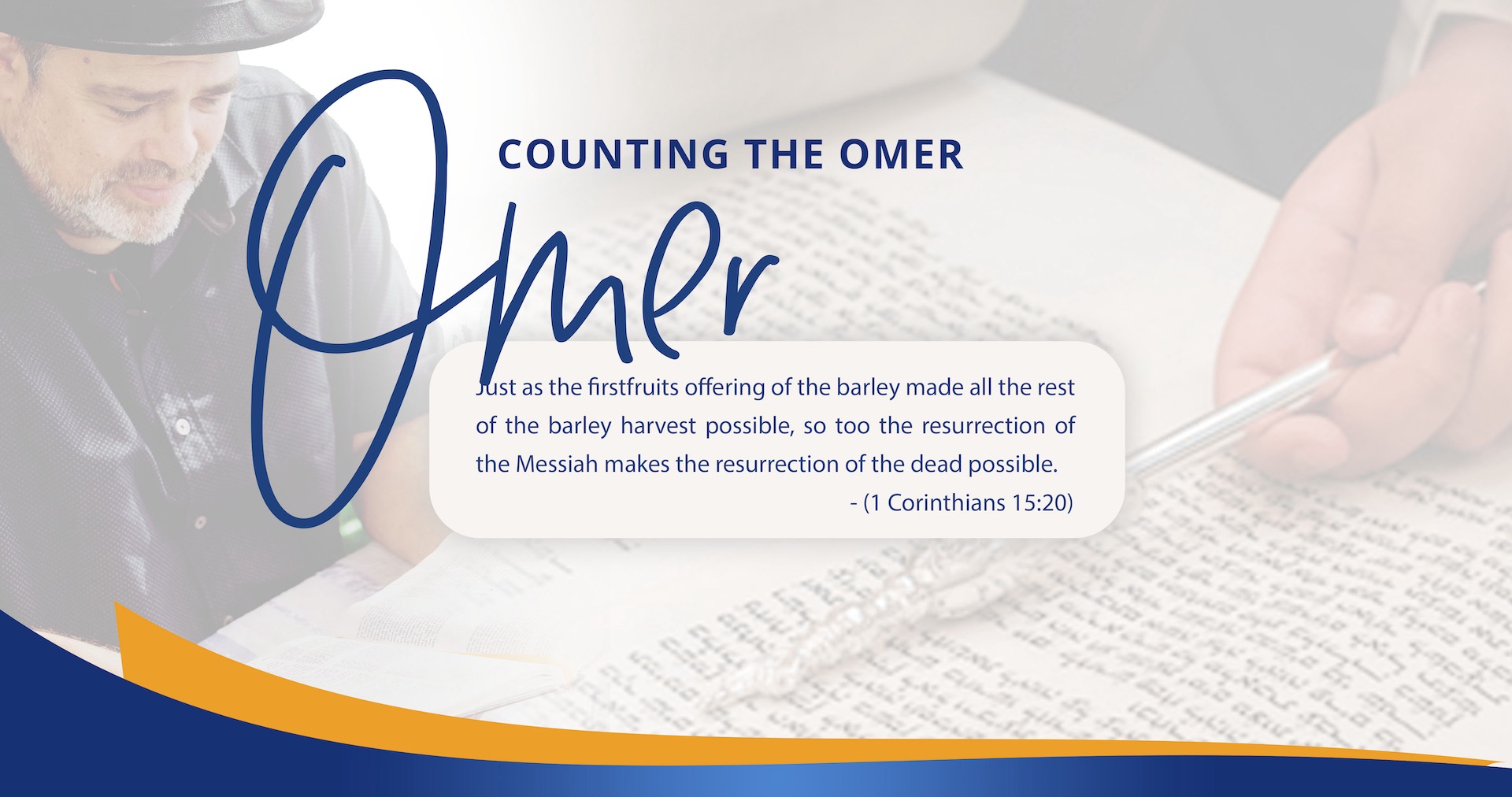
Starting from the second night of Passover, the Bible encourages us to all become “Pentecostals” by initiating a forty-nine-day minor festival culminating on the Day of Pentecost—“Pentecost,” meaning “fifty.” The first fruits festival, known as “The Counting of the Omer” or simply “The Omer,” marks a culmination of three unique historical events and has enormous significance in the life of a disciple of Yeshua – Jesus.
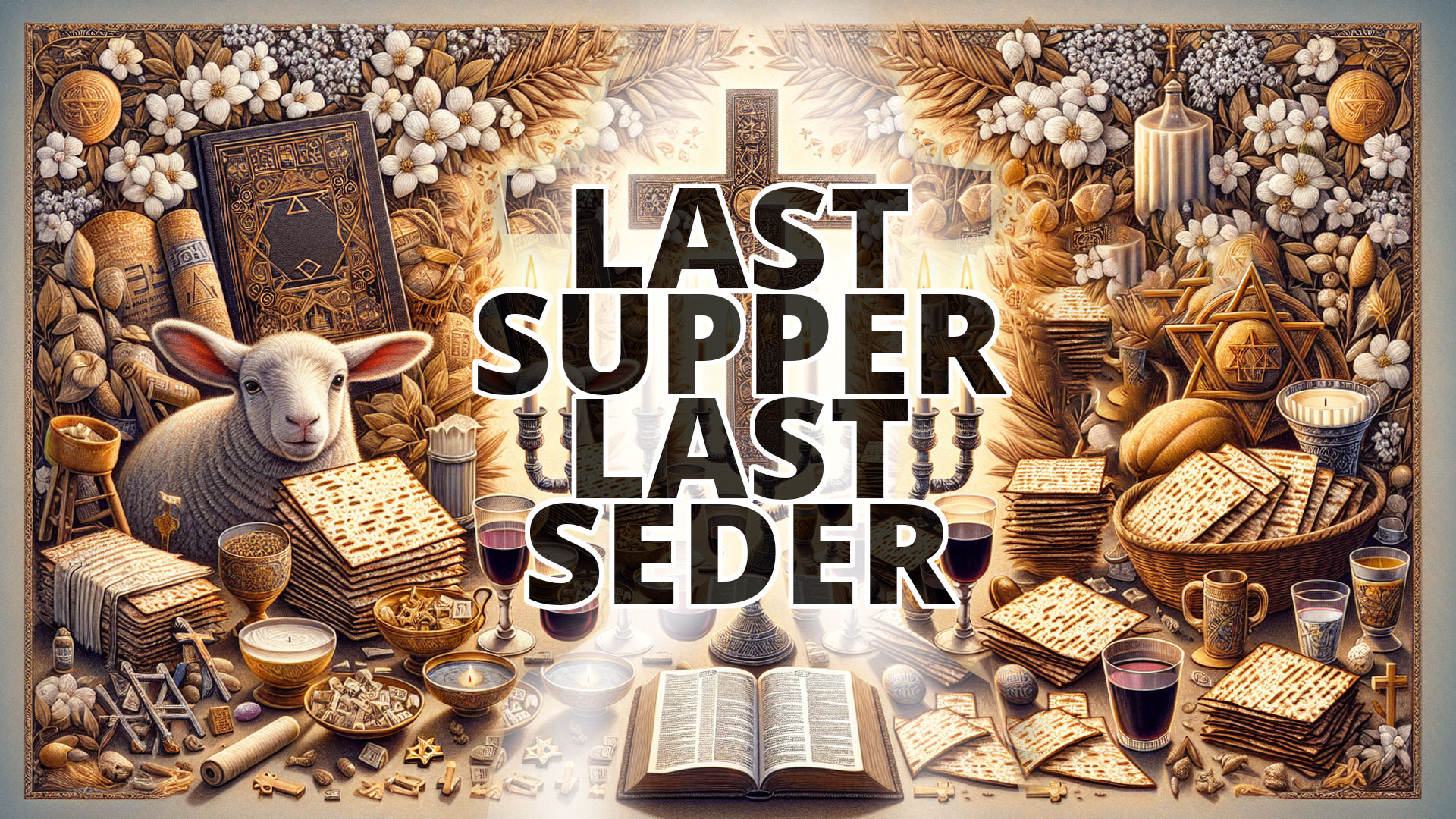
Each year, as we approach Passover and Easter, we start receiving questions about whether “The Last Supper” was a Passover Seder. Many Christians are surprised to learn that interpretations and theories vary widely about the nature of the meal Jesus shared with his disciples the night before His death.
What is the saddest day in Jewish History?
The most solemn day on the Jewish calendar is Tisha B’Av—the ninth day of Av. It is a time for mourning as a community. On (or around) this day throughout history, many calamities have befallen the Jewish people. Consider some of these dark episodes…
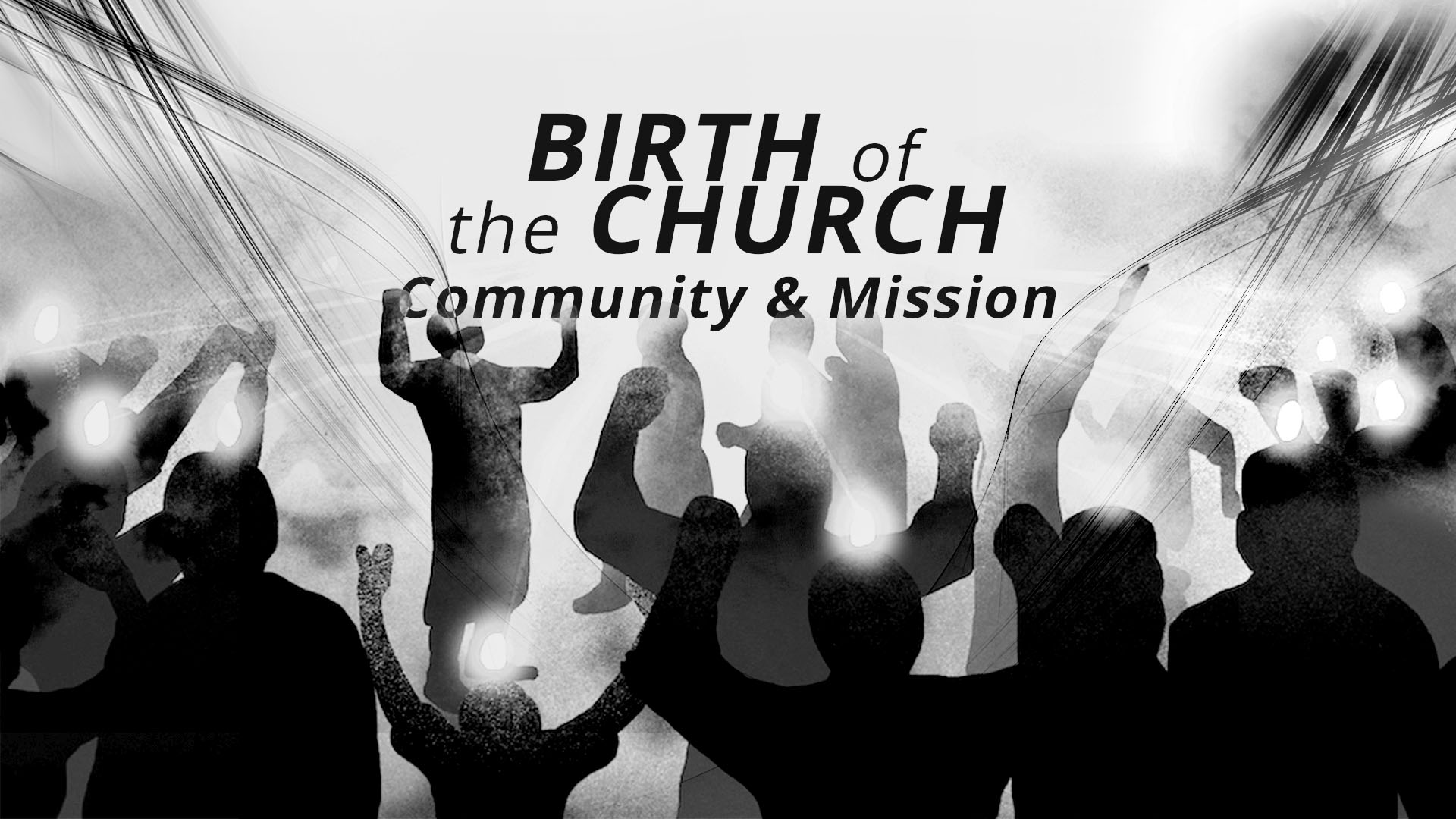
The Day of Pentecost in Acts 2 as the “birth of the Church.” This language ostensibly implies the start of something new. However, we should be cautious of such terminology lest we fall into the trap of “replacement theology.” The Pentecost event in Acts was not a replacement of Israel but rather the renewal of covenantal relationship and purpose with a radical expansion.
A Fire that Will Not Die “You will receive power… and you will be my witnesses…Acts 1:4,5,8 – The Resurrected Lord spent forty days with His disciples, preparing them to set the world on fire and carry out the Great Commission. However, He did not immediately send them out. Instead, He told them that they needed to wait and pray. While they knew the Father and spent years getting to know Yeshua, they would now need to receive and get to know the Ruach (the Hebrew word for “Spirit”).
Shavuot / The Sinai event was several things wrapped in one; perhaps most significantly, the “Word became flesh and dwelt among us”. In recounting the giving of the Law at Pentecost, Moses said, “Adonai came from Sinai and dawned on Bnei-Yisrael from Seir. He shone forth from Mount Paran, and He came from the holy myriads— blazing fire for them from His right hand.” (Deuteronomy 33:2). Shavuot (the Feast of Weeks), also known as Pentecost, is the traditional Jewish celebration of the reception of the Torah. It occurs seven weeks or fifty days after the feast of Passover, hence its name (the Greek word Πεντηκοστή – Pentēkostē, meaning “fiftieth”)
"The Rabbi makes a most exciting explanation of the Scriptures. I’ve studied the Bible for three decades now and the Rabbi’s explanations bring everything together. He provides such a fresh perspective on everything as seen through Jewish eyes. I knew the Bible speaks of the Messiah from the beginning to the end but I didn’t know this was true literally from the first letter in Genesis to the last letter of Revelation."
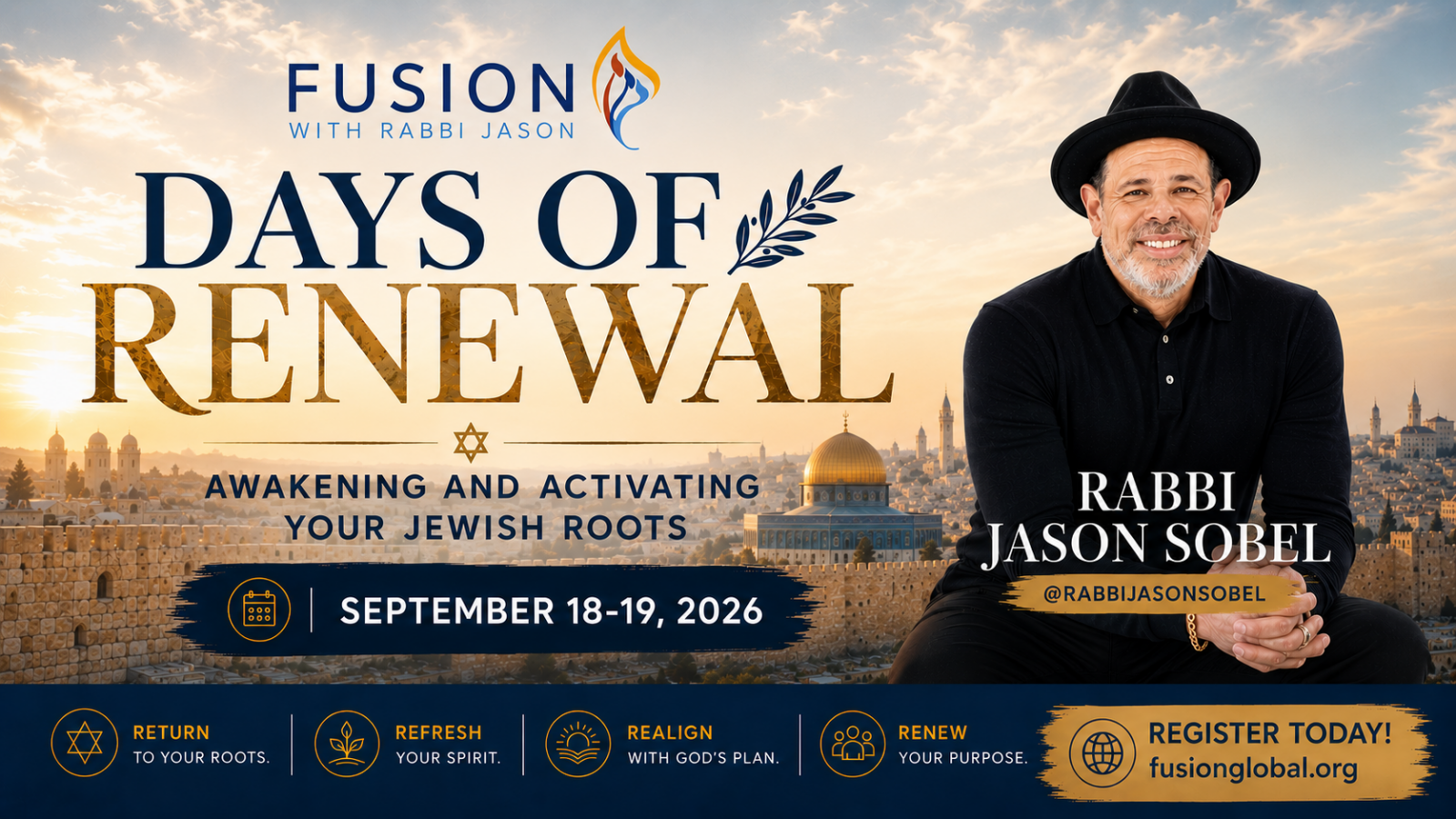
What is Fusion with Rabbi Jason?
It is in looking back at what God has done that we can see forward to His future plans for us. “For I know the plans I have for you,’ declares the Lord, plans to prosper you and not to harm you, plans to give you hope and a future” Jer 29:11.
At Fusion Global with Rabbi Jason Sobel, we want to add definition to your faith as we restore the lost connection to our ancient roots and rediscover our forgotten inheritance.